Short answer: Guanacaste offers a more established market with better tourism infrastructure and higher liquidity, but at a significant price premium. The Southern Zone (Costa Ballena — Uvita, Ojochal, Dominical) offers comparable or better natural beauty at 30–40% lower prices, faster appreciation off a smaller base, and a quieter, more community-driven lifestyle. The right choice depends on whether you’re prioritizing rental income and resale speed (Guanacaste) or long-term value, lifestyle, and lower entry cost (Southern Zone).
If you’re searching for Costa Rica real estate for sale, you’re not alone, Guanacaste and the Southern Zone are consistently the two most-searched coastal markets in the country. Here’s how they actually compare, region by region, including where to look if the Southern Zone turns out to be your fit.
Guanacaste vs. Southern Zone: Quick Comparison
| Factor | Guanacaste | Southern Zone (Costa Ballena) |
|---|---|---|
| Average home price | ~$650,000 (premium coastal zones) | $250,000–$400,000 |
| Price per m² | $3,500–$4,700 | 30–40% below Guanacaste |
| Rental occupancy | ~91% (highest in the country) | Lower occupancy, but stronger cap rates (8–12%) |
| Market maturity | Established since early 2000s | Emerging, gaining momentum |
| Airport access | Liberia International (direct US/Canada flights) | Regional strip; Brunca International Airport approved for development. By car is faster. |
| Vibe | Resort towns, higher density, more nightlife | Jungle-meets-ocean, low density, eco-conscious |
| Buyer competition | High | Lower — more room to negotiate |
Why Guanacaste Costs More
Guanacaste’s premium comes down to one thing: infrastructure that arrived early. When Liberia’s international airport opened to direct U.S. and Canadian flights in the early 2000s, towns like Tamarindo, Nosara, and Playa Flamingo went from sleepy surf villages to internationally recognized real estate markets within a decade. That head start built the roads, high-speed internet, resort amenities, and rental demand that support today’s prices, and today’s rents. Some Nosara cabins now list for $4,000/month, a sign of how far pricing has run in the most in-demand pockets.
The tradeoff: that same maturity means less room to find value. You’re buying into a market that has already priced in most of its growth.
Why the Southern Zone Is Gaining Ground
The Southern Zone — Uvita real estate, Ojochal real estate, Dominical real estate, and Golfito real estate on the wider Osa Peninsula, is where Guanacaste was roughly 15–20 years ago, minus the isolation. The region already has a thriving, established international community, reliable services, and a genuine culinary and wellness scene (Ojochal in particular has built a reputation as one of Costa Rica’s best food destinations). What it’s been missing is the infrastructure catalyst.
That’s changing. The long-planned Aeropuerto Internacional de la Región Brunca, after two decades of stalled starts, has real momentum again as of 2026, a development that mirrors exactly what happened to Guanacaste property values after Liberia’s airport opened. Buyers who purchase Uvita or Dominical beach real estate, or land in Escaleras or Ojochal, before that airport is finalized are positioned similarly to the buyers who got into Tamarindo before its direct flights were confirmed. We cover this timing question in more depth in Is It a Good Time to Buy Real Estate in Costa Rica?
In the meantime, the numbers already favor the Southern Zone for value-focused buyers:
- Lower entry cost. Comparable homes run 30–40% cheaper than Guanacaste.
- Stronger cap rates. Southern Zone short-term rentals are producing 8–12% net cap rates, competitive with Guanacaste’s higher-occupancy but higher-cost properties.
- Less competition. Fewer buyers chasing the same inventory means more negotiating leverage and a genuine buyer’s market in most price bands.
Lifestyle Differences That Matter Beyond the Numbers
Guanacaste suits buyers who want resort-style living: more restaurants, more expat density, more built-out tourism infrastructure, and easier access to direct international flights. It’s a strong fit if rental liquidity and resale speed matter more to you than lifestyle pace.
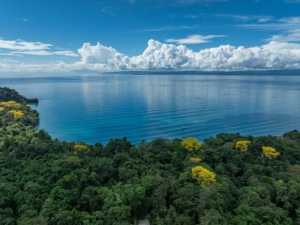
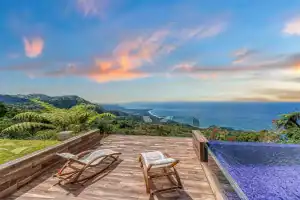
The Southern Zone suits buyers drawn to the combination of mountains and ocean in one view, lower density, and a slower, more nature-immersed pace of life. Costa Ballena sits inside and around Marino Ballena National Park, with the Whale’s Tail sandbar as its most iconic landmark, and the region draws a mix of digital nomads, retirees, and families who specifically chose it over the north Pacific for its quieter character. Buyers focused specifically on Dominical beach real estate tend to want that walk-to-the-water lifestyle without Guanacaste’s density, while those looking a little further inland toward Ojochal or Golfito often prioritize privacy and jungle views over beach proximity. If you’re deciding between the two most popular Southern Zone towns themselves, Ojochal vs Uvita Costa Rica breaks down that comparison in detail.
Both regions are genuinely safe, expat-friendly, and well-served by bilingual professionals, the difference is closer to “resort town” versus “small coastal community” than it is a difference in quality of life.
So, Which Should You Choose?
- Choose Guanacaste if you want a proven rental market, direct international flight access, and are comfortable paying a premium for that certainty.
- Choose the Southern Zone if you want more property for your budget, stronger upside potential tied to the coming airport development, and a lifestyle built around quiet, nature, and community rather than resort density.
Many of our clients who compare both regions end up choosing the Southern Zone specifically because it offers the version of Guanacaste’s early-2000s opportunity, without having to compromise on infrastructure or community that already exists today.
Once You’ve Picked a Region, What Should You Buy?
Choosing between Guanacaste and the Southern Zone is only the first decision. If you land on the Southern Zone, the next question is usually what kind of property fits your goals:
- If you’re weighing raw land against a finished home, Is It Better to Buy Land or a Home in Costa Rica? walks through the tradeoffs in detail.
- If low-maintenance ownership appeals to you more than a standalone home or lot, Is Costa Rica a Good Place to Buy a Condo? 2026 Guide covers where condos make sense.
- If you’re leaning toward land with the intent to build, How Much Does It Cost to Build a House in Costa Rica? will help you budget realistically before you commit.
Want more like this? Read more articles on our blog for in-depth guides on buying, building, and living in Costa Rica’s Southern Zone.
Frequently Asked Questions
Is the Southern Zone cheaper than Guanacaste? Yes. Comparable properties in Uvita, Dominical, and Ojochal typically list 30–40% below equivalent properties in Guanacaste’s premium coastal zones.
Which area has better rental income potential? Guanacaste has higher occupancy rates (around 91% in top zones), but the Southern Zone is producing stronger net cap rates (8–12%) on a lower purchase price, which can mean comparable or better returns on investment.
Will property values in the Southern Zone catch up to Guanacaste? The Southern Zone is following a similar infrastructure trajectory to Guanacaste’s early growth, particularly with the planned Brunca International Airport. Historically, this kind of infrastructure investment has driven significant appreciation in comparable Costa Rican markets, though future results are never guaranteed.
Is the Southern Zone as expat-friendly as Guanacaste? Yes. Costa Ballena (Uvita, Ojochal, Dominical) has a well-established international community with bilingual services, though it’s smaller and less commercialized than Guanacaste’s larger resort towns.
Thinking through Guanacaste versus the Southern Zone for your own purchase? At Century 21 Ballena Properties, we specialize exclusively in Costa Rica real estate in the Southern Zone. Browse current listings for Dominical real estate, Uvita real estate, Ojochal real estate, and Golfito real estate, or contact our bilingual team for a price comparison and a read on what the coming airport development means for your investment timeline.